
Make your systems behave like one system.
ERP, e-commerce, warehouse, accounting — connected by integration software you own, so data flows once and your business rules survive every vendor change.
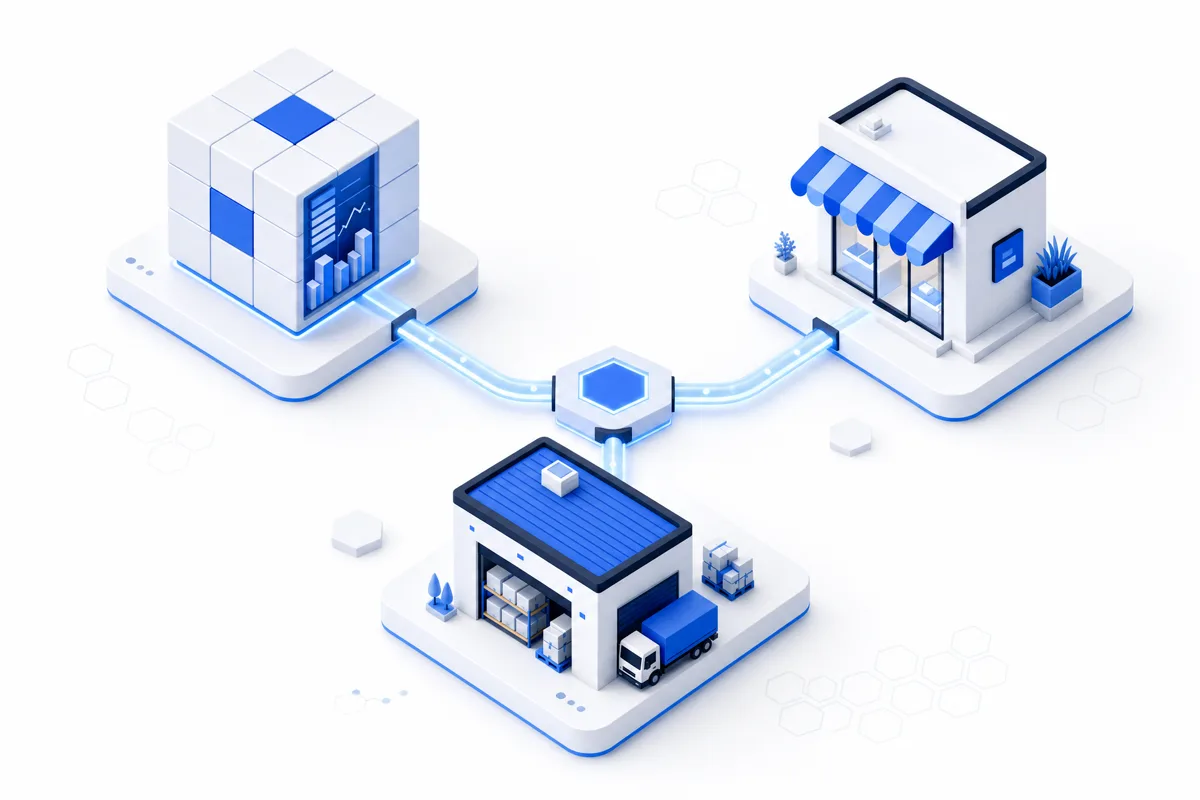
Four systems. Four versions of the truth.
Stock levels the website doesn't trust. Orders re-keyed from the store into the ERP. Pricing that's right in one system and stale in two others. Sync jobs that fail quietly on Friday night and surface as angry customers on Monday.
Fragmented tools aren't fixed by buying a fifth tool. They're fixed by integration software that routes data once, applies your rules consistently, and tells you loudly when something needs a human.
- Integration between ERP, e-commerce, warehouse and accounting platforms
- Replacement of fragile, undocumented sync logic with software you own
- Business rules decoupled from third-party platforms — vendors become replaceable
- Full logging, safe retries and human alerts when judgement is needed
- Reporting layers that join the connected data into trusted numbers
Integrations are living software too.
Every platform you connect to changes its API eventually. Integration software sold as a one-off project breaks the day that happens. Under the retainer, yours is monitored, maintained and released monthly like everything else we run. The full model →
Integration, plainly answered.
01Our ERP and online store don't sync properly. Can that be fixed?
Almost always — and usually without replacing either system. Broken sync is typically fragile point-to-point logic written years ago: it fails silently, double-writes on retries, and nobody left in the business understands it. We replace it with integration software you own: explicit rules, full logging, safe retries, and alerts when something genuinely needs a human. The trade counter stops fighting the website.
02Should we replace our ERP or integrate around it?
Integrate first, almost always. ERP replacement is a multi-year disruption most businesses underestimate, and the usual complaints — double entry, no visibility, workarounds — are integration problems, not ERP problems. A custom integration layer keeps the ERP doing what it's good at and fixes what it isn't. We'll tell you honestly if your ERP genuinely is the problem; that's rarer than ERP vendors suggest.
03What does it mean to insulate business rules from vendors?
If your pricing, freight and account logic lives inside a third-party platform's customisation layer, every vendor upgrade can break your operations — and leaving that vendor means rebuilding everything. We put core business rules in software you own, with vendors connected at the edges. Vendors then become replaceable components instead of load-bearing walls.
How many systems hold part of your truth?
Tell us which systems don't talk, and what breaks when they don't. We reply within one business day.